

Notebook “tours” have popped up in my email newsletter subscriptions lately, complete with scans of handwritten pages from writers willing to share their doodles, scrawls, sketches, and scribbles. I find these fascinating from two perspectives: in addition to giving us a glimpse into a private space, they reveal something crucial about the creative process. These excerpts show, literally, the bits and pieces of language that might become a poem, essay, or story, or might just stay on that page, complete in themselves.
Handwriting grabs our attention in ways that printed words simply don’t. As I watched the recently released documentary Billy Joel: And So It Goes, images of Joel’s lyrics, penned on white sheets of paper, spread across the screen: long sentences filled with words and phrases, some crossed out, some traced over and over. Here was evidence of a creative mind at work; Joel’s words were like a sculptor’s fingerprints in clay.
I started keeping a notebook at the age of ten, continued on and off throughout my teens and twenties, and then in earnest in middle age. As I review these pages, what I left out often strikes me more than what I wrote. My earliest notebooks, for example, completely avoid the elephant in the room: my parents’ marriage was falling apart, a fact that haunts those brittle pages like a palimpsest of memory.
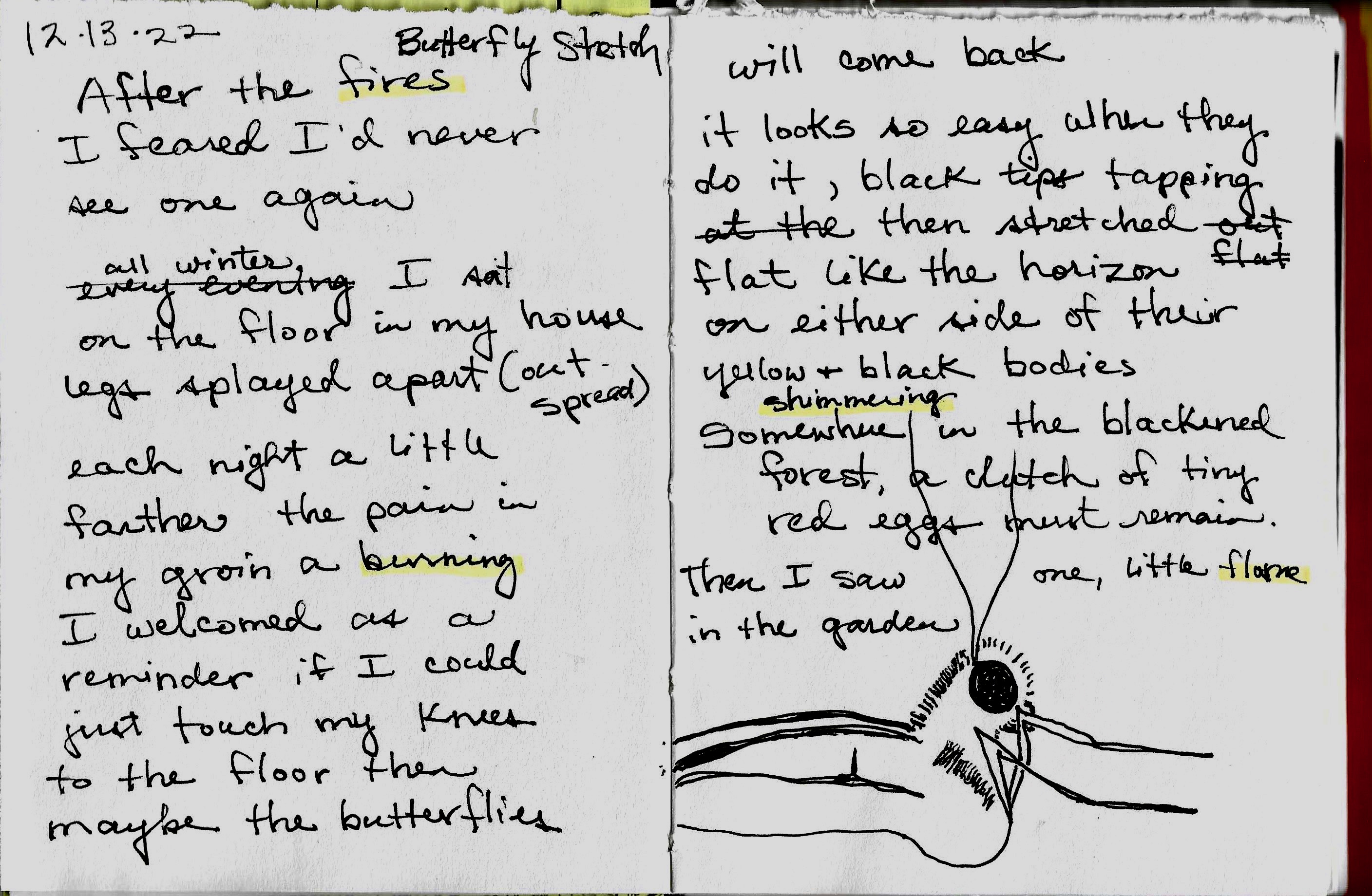
Something I find rewarding is a personal notebook tour. I’ll go back through the previous year’s journals, looking for the germ of an idea, the thing that led to a finished piece of writing. The image below shows the beginning of the poem “Butterfly Pose:”
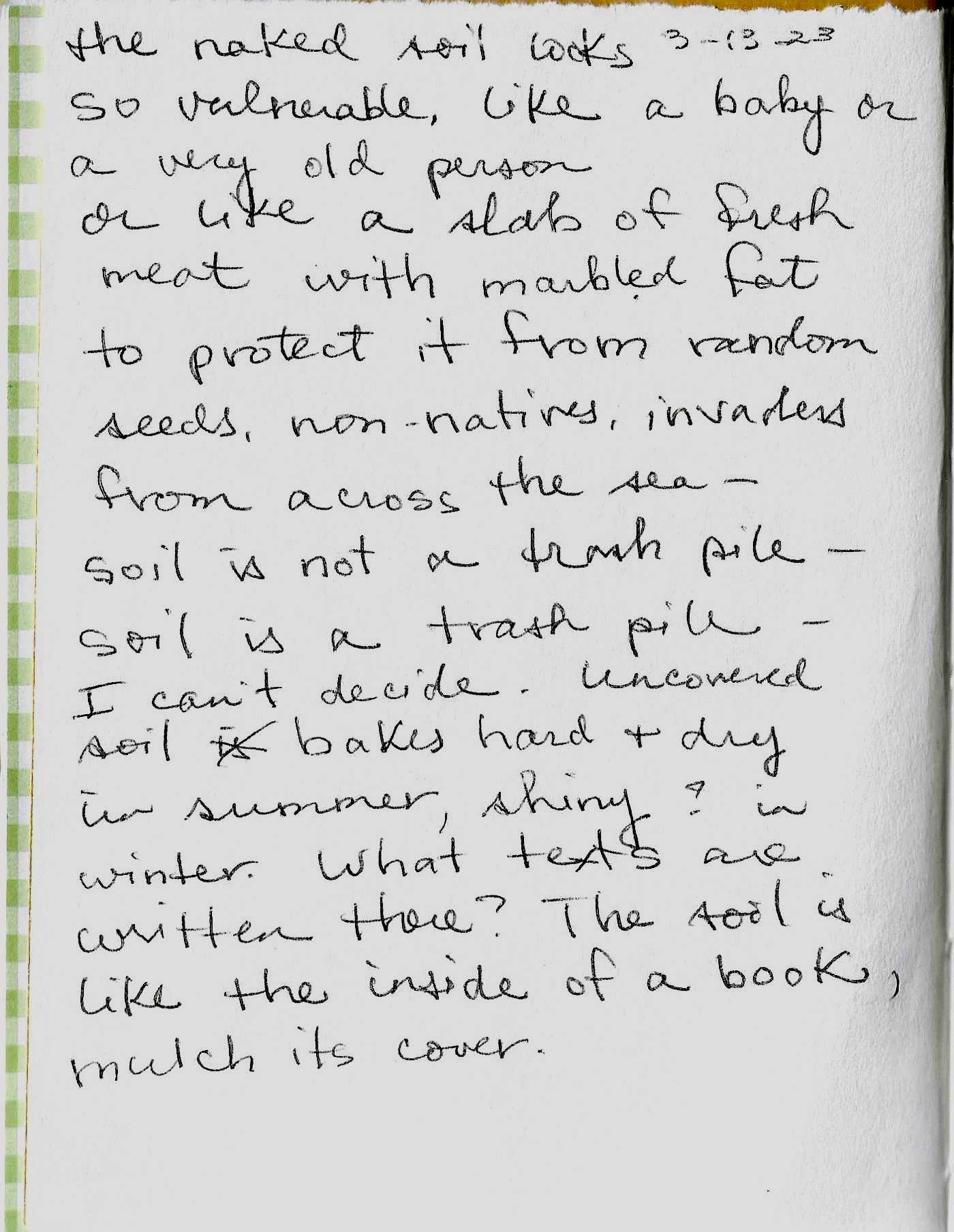
I found the notes that became “Mulch” in the same notebook:
“Un Día Ordinario,” an abecedarian, started as a musing on the word serpenteante, Spanish for “meandering” or “looped:”


But the majority of what’s in my notebooks, random thoughts and impressions that felt important enough to write down, will probably never see the light of day. They are a record of my dreams and wishes, no more, no less.
Some notable journal-keepers: Audre Lorde, Annie Dillard, Anais Nin, C.S. Lewis, Virginia Woolf, John Cheever, and William Faulkner.
You might also enjoy “Keep, Burn, Curate, or Donate: What to Do With Your Old Journals” from Writers Digest.

1 thought on “The Notebook Tour – What Shows, What’s Hidden”