




Just for fun, here are five poetry forms you might not be familiar with. I hope they spark some creativity.
- The recipe poem. This idea comes from Julie Marie Wade’s review of How to Not Be Afraid of Everything, a book of poems by Jane Wong. In the review, Wade explains how she emulates a poet’s work—”emulation is the greatest form of homage”—by creating a “kit,” a “kind of flexible recipe, one which could then be used to generate poems” in the style of that poet. From the review, here are some tips for writing a poem inspired by Jane Wong’s book: “Do not fear involving the reader or audience in your decision-making process as a poet,” “Notice what is not there and honor these absences in writing,” and “Prepare a simile that links something general, cerebral, or sensory-deficient with something specific, visceral, and sensory-suffuse.” I found these ideas intriguing and look forward to making some of my own recipes.
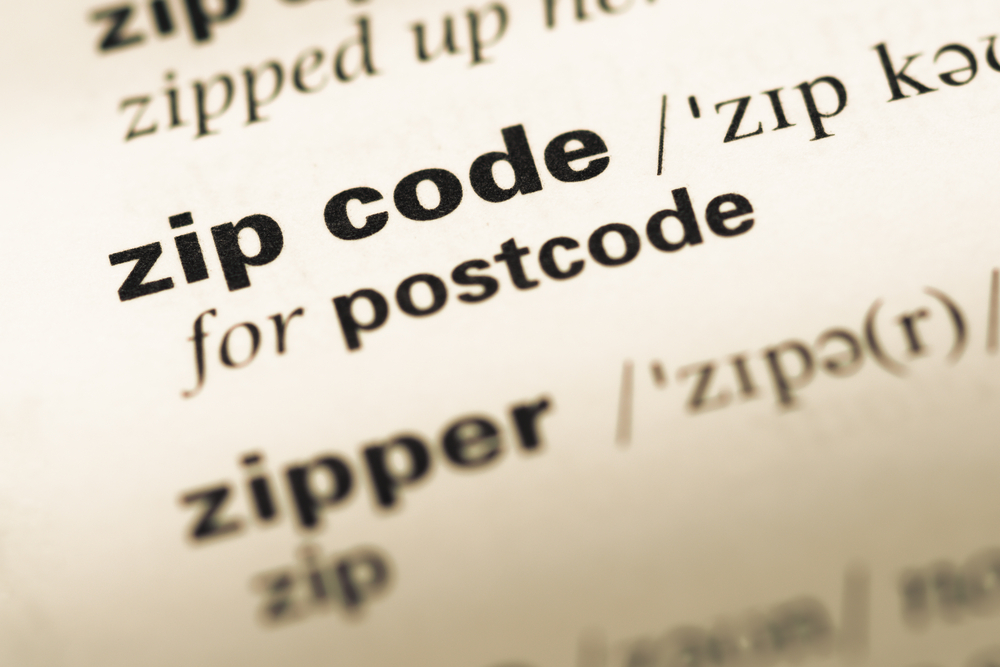
- The ZipOde. I found this at O, Miami, a wonderful organization that promotes poetry through festivals, workshops, and classes. The ZipOde “is designed to transform your zip code into an occasion for place-based, lyrical celebration.” It’s not too difficult to write a ZipOde: “Write the numbers of your zip code down the left-hand side of the page. Each number determines the number of words in that line. Note: if you have a zero in your zip code, that line is a wild card! You can leave it blank, insert an emoji or symbol, or use any number of words between 1 and 9.” This sounds like a fun way to generate some new ideas without too much stress involved.
- The coffee-contemplation poem. This form arose in my poetry critique group. One of us is adept at writing poems that start as descriptions of the surroundings in a coffeeshop, and then expanding those observations into a poem that reveals a cultural or societal issue centered on a particular location. Try this at your favorite place to get a cup of coffee: write what you see in the coffeeshop, and then look for any deeper meaning within those lines.
- The Fibonacci poem. “Math plus poetry yields the Fib,” writes Deborah Haar Clark at the Poetry Foundation.This form was created by Los Angeles writer Gregory K. Pincus, who created the Fib while trying to write haiku. In the Fib, “The number of syllables in each line of the poem is the sum of the previous two lines: 1, 1, 2, 3, 5, 8.” The appeal of this form lies in its ability to connect math and language arts. To quote Tony Barnstone, “people are extremely hungry for poetry, but they don’t have access to it; they can’t find the door. The hothouse poetries of the academy are not written for them, and so they turn to forms that are more inviting, to spoken word, to rap, to haiku and to the Fib. Once inside the house of poetry, they can feast.” I hope you’ll have fun feasting on a Fib.
- The square-foot poem. It was July of 2020, early in the pandemic, when I made up a form in homage to the classic gardening book, Square Foot Gardening by Mel Bartholomew. The square-foot poem starts as a wordpool crammed into a small square—a 3 x 3 inch post-it note, for example. “Small, non-scary yellow squares filled with words seem almost playful, and are just as good at turning into sentences, stanzas and paragraphs as fully-filled sheets of paper,” I wrote back in 2020, and I still write square-foot poetry often. Many of my poems started out as little squares filled with words. If you feel like doodling, this is a good way to make poems out of your scribbles.
There you have it: five poetry forms that will hopefully lead to more poems, and if not, will at least offer some harmless amusement.
Do you have a poetry form that works for you? If so, please share in the comments.

Came here from Dave Bonta’s digest. Interesting forms. I’ve done a few Fibs and I do want to try the coffee shop poem!!! Thanks!